Showing posts with label Copyright. Show all posts

Sunday, January 24, 2016

I BOUGHT my car, Jack.

As with most laws, the Digital Millennium Copyright Act (DCMA) has had disastrous unintended consequences. One of these is communicated in this recent Slate article:


It's not just tractors, it's all vehicles. Auto makers now claim that we don't actually own the cars we buy... we license them. This is a bit more disturbing than computer operating systems. Microsoft doesn't claim to own your Dell. But because the software is embedded and citing such concerns as safety (after all, think of the children), the automakers are claiming that nope... nobody gets access to the computer except licensed, authorized (aka paying) maintenance technicians.

Reacting to a desire for tinkering, Ford has developed what they hope to be a standard way of extending an automobile's capabilities with "vehicle-aware applications", the OpenXC open source platform:
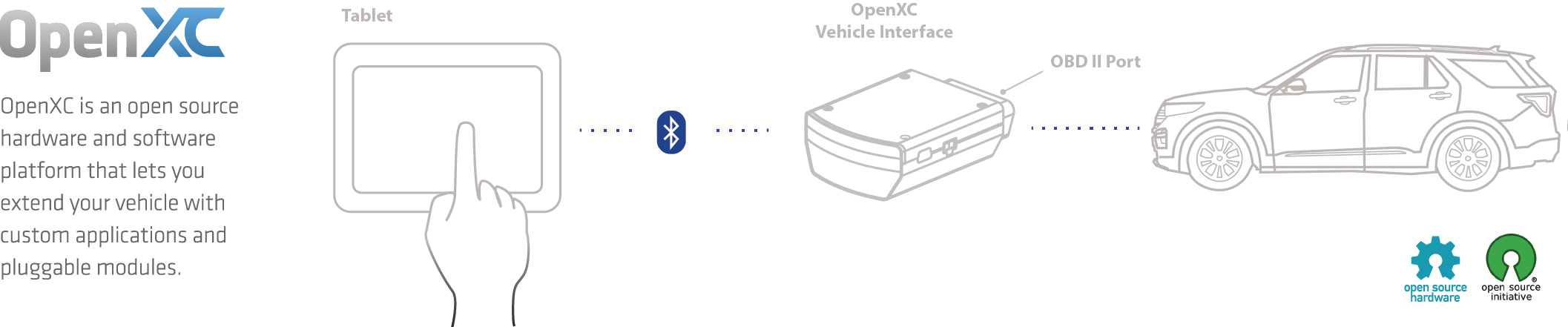

While this is a step in the right direction, it is a simply method of loading more electronics onto your car without "bricking" your $20,000 automotive investment. It does not address the ECU (Engine Control Unit), which remains verboten. It does not allow true tinkering down to the metal. "No hot-rodding for you," snaps the Auto Nazi.

Sadly, we live in an environment where people see other people arbitrarily controlling the minutiae of strangers' lives, and they come away from that experience with both a desire to do it themselves, and the perverted expectation that this is normal behavior. This is perhaps to be expected in a world that confuses the Second Amendment of the U.S. Constitution with a hunting license, but the analogy is disturbingly close. More, and more... and in more and more products... we see ourselves locked out of ownership of the things we bought due to increased reliance on computer code in embedded processors. This includes products for which there is no rational need for a processor (toasters come to mind). The fact of the matter is, I don't want a car that drives itself, that connects to the Internet, that is a wi-fi hub, that can be hacked using a discoverable code such as the VIN or license number, that can be bricked or even unlocked remotely. I don't want it whether it done maliciously, or accidentally, or deliberately by the police.

I don't want it. I don't want it so much that I went to great lengths to buy an older model of the car I like so as to avoid these unnecessary "features".

This isn't a matter of some desire to tinker together a new instrument panel. It's a basic measure of my Freedom that makes me insist on clear legal ownership of those things that I clearly own by right of purchase. If I cannot exercise that right due to encumbered components, then I should have the right to remove them so as not to infringe on the copyrights held so dear to those who hold them.

Bottom line for car manufacturers: I know you think your copyrighted material is terribly valuable, but I don't want it. It's worse than worthless to me... it prevents me from buying a car that is so encumbered at all.

In automobiles, the need for computerization is there and is rational, as computer-controlled fuel injection has long replaced carburetion. As that is the case, then the rational response of the citizenry, were they to have actual control over the laws enacted for the Public Good, should be to insist that the hardware of the car be legally divorced from the software. The ECU should be subject to competition, as should the maintenance of vehicles. I should be able to replace the encumbered operating system with one of my choice.

Recognizing the problem, there's an opportunity for a cottage industry of Open Source engine control units, and people who recognize it. Hackaday reported on such a project in 2014. The rusEFI Wiki is a source for current information on this project.


However, such projects still potentially run foul of copyright and patent claims of automakers who insist that you don't own what you own. What is needed is a revision of those laws that continue to separate us from our rights as individuals in areas never envisioned.


P.S. Thanks to Caleb for this related topic:

The Ethical Dilemma of Self-Driving Cars
Who should your robot car kill? The ethical dilemma of self-driving cars:
Posted by TED-Ed on Tuesday, December 8, 2015

Saturday, December 12, 2015

Keep it Free


There are a number of things worthy of public funding. Benjamin Franklin and his friends realized this when they started the Library Company of Philadelphia, founded in 1731 and still going strong. This library was conceived to be publicly-funded, not government-funded. Members of the library paid dues, the benefit of which was that they could borrow books without a deposit; and members of the general public could borrow books, provided they left a refundable deposit to cover the cost of the book. Or, you could read in the library for free.

This is how members of a free society work together... by making voluntary contributions toward the public good. It's worked for the Library Company of Philadelphia for 284 years. We encourage private funding for public benefit because, frankly, the government does not have your back. Copyright is not a natural right. If you want to keep information private, the only natural way to do so is to keep it secret. Otherwise, what's said is said, and you can't put the smoke back in the bottle. So copyright is an agreement to grant exclusivity for only a limited time, so as to encourage authors to share their work, so that it can in due time be placed into the Public Domain. That's the goal... to get it into the hands of the public to be built upon and expanded. But over the years, governments worldwide have become more and more averse to the intellectual commons. At the behest of vested interests, they have increased the length of copyrights to unreasonable lengths. Whereas once it was commonly understood that when you bought a book, that copy was yours to do do with as you like, including re-selling it; today it is commonplace to be restricted by "licensing terms" that never existed even a few short decades ago. Now you not only don't own your copy, you can't use it as you will. The people who have orchestrated these changes are not operating in the public interest.

But, like Life in Jurassic Park, altruism will find a way.


The public reaction to unreasonable copyrights is the Creative Commons.The Creative Commons is a way for content creators to remove power from those who would pervert the copyright system by using their legalisms against them. Sometimes called "copyleft", creative commons licenses grant broad usage rights while prohibiting others from imposing additional restrictions. This began with the Free Software Foundation's General Public License and moved into Free Music, and more generally the Creative Commons itself. Today, millions of works, including the one you're reading, are covered under Creative Commons licenses.


Today you don't even need to buy a single closed, restrictive resource to do your work. This article was written with Libre software (Firefox) on a Libre operating system (Linux) with graphics provided by a Creative Commons archive (Wikimedia Commons) modified with more Libre software (GIMP). Links and references are provided by a Creative Commons encyclopedia (Wikipedia).


That last part is perhaps the most astonishing, but also the closest to Ben Franklin's original vision for the Library Company of Philadelphia. It wasn't so long ago that encyclopaedias were expensive. I know: I have a full physical set of Encyclopaedia Britannica. It cost thousands of dollars, but parents were willing to pay that sort of cash for the benefit of their children's' education. Those who couldn't afford it could visit the public libraries, but this has always been an inconvenience that left some kids at a disadvantage. I was a frequent library visitor in my teens, but as the nearest branch was several miles away, and I traveled by bicycle, such visits were relegated to the Saturday afternoons. And even then, it being a branch, it didn't always have a book I needed. They'd get it from the main branch by request, and that required a week of planning.

Today we have the internet in our homes. We have the Internet Archive, which is perhaps the most under-rated library in the entire world. And we have Wikipedia and the Wikimedia Commons. Despite some derogatory press (mainly from non-free competitors), Wikipedia is an excellent starting point for academic research. Wikipedia articles are concise, complete, and well-referenced. It's up to you, the researcher, to follow those references. This is what the Internet is for. Information.

And cat videos. But mostly information.


It's Fundraising Season!

Please note that when we say "free", it doesn't mean without cost. "Free" refers to the liberty to decide for ourselves what is important to us, to direct our resources accordingly, and to be rewarded with not only successful, healthy enterprises that deliver value; but with the natural attrition of those enterprises that don't, so the resources are targeted at what the public needs. And it's the public who determines what it needs with their patronage... nobody else is required to do it for them. No expertise or authority is necessary. It just naturally happens.

That is how a free market do.

Free software always has a cost, even if it's paid only with the time and effort of its creator. And these creative individuals, as altruistic as they may be, do deserve to be paid. But fairness really demands that they should be paid in accordance with the utility and popularity of their work. No government can really determine that, and that's where we... the users... come in. And we've got some really creative, flexible ways of supporting creators in this new economy.

All of the sites referenced above are taking direct donations in December. You'll see banners on most of them this month when you visit. If you use the site, if you like it, if you have the means to contribute, please donate. All of the money collected goes to the operating cost of the respective sites. These sites all operate entirely on the money that people are moved to contribute. And that's pretty much all they need to get by... voluntary generosity.

If there were no taxes, who would pave the roads? Who would build the libraries? They'd be built by the people who need them, and want them. Ask Wikipedia, or the FSF, or CreativeCommons.org, or the Internet Archive.

And while we're discussing the spirit of giving, remember those others who provide for you the year 'round:


Music and Video
If you like what a band is doing, just buy their work. You might not buy everything they create, and it might not be all the time. You might just buy the things you really like, but musicians no longer need to be strangled by record labels. Find an artist you like and buy their work directly on BandCamp or SoundCloud or iTunes. Kickstart an album. If there's an artist you really like, be it a band or YouTube performer, then support them on an ongoing basis with a Patreon account. And if you can't do that, then tell your adblocker to exempt their site. Let the advertisers pay them.


Software
Buy Free and Open Source software (Libre software), or donate to the project. Most of these allow you to donate whatever it is that the app is worth to you. And if you can't afford much, you can always donate what you can and come back to give more later. If you can't do either, then use it with the compliments of the authors, and compliment them back... loudly, and publicly, so that others will use their work and donate.


Entertainment and Projects
Somebody's got an idea for a movie you'd really love to see? Then back it on Kickstarter. For the cost of an evening out and a little bit of patience, you get to be a financial backer on a production that would otherwise never make it through the bureaucracy of the Hollywood studios.