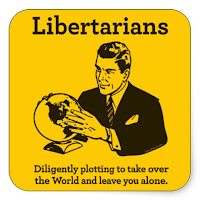
Showing posts with label Explaining The Obvious. Show all posts

Monday, June 25, 2018

Supreme Court: Free Speech Means Free Speech

A year ago, Emily Jashinsky reported in The Washington Examiner:
It's a little puzzling that this was reported in the Opinion section rather than as a straight news, because it's mostly straight news, and the small bit of opinion at the end of the piece is easily edited.

In summary, the case "Matal v. Tam" concerns a dance band ("The Slants") whose application for trademark protection was denied under a Lanham Act provision prohibiting the registration of trademarks that may “disparage ... or bring ... into contemp[t] or disrepute” any “persons, living or dead.” 15 U. S. C. §1052(a).

In a unanimous decision, the court upheld the First Amendment and declared the clause unconstitutional. The court unambiguously declared, "We now hold that this provision violates the Free Speech Clause of the First Amendment. It offends a bedrock First Amendment principle: Speech may not be banned on the ground that it expresses ideas that offend."

Here's the court's actual decision [PDF]

Never mind speech that might offend. Unambiguously offensive speech is protected.

And that's how it should be. As has been mentioned before, popular speech needs no protection, and cannot be the reason for the existence of the Free Speech clause of the First Amendment. As stated by Justice Kennedy:
"A law that can be directed against speech found offensive to some portion of the public can be turned against minority and dissenting views to the detriment of all. The First Amendment does not entrust that power to the government’s benevolence. Instead, our reliance must be on the substantial safeguards of free and open discussion in a democratic society."
In their decision, the court holds that the trademarks people choose for their businesses is private speech, not government speech; and that it does not become government speech due to the issuance of a trademark. It is therefore protected, and the disparagement clause of the Lantham Act is therefore unconstitutional.

The court further opines, "We need not decide today whether respondent could bring suit under §43(a) if his application for federal registration had been lawfully denied under the disparagement clause." This is because the disparagement clause itself is unconstitutional and may not now be used as a reason for denying a trademark. In other words, the issue is moot.

--==//oOo\\==--

What the Examiner's story fails to mention is that the members of The Slants are Asian Americans who chose the name to "reclaim" it and strip it of its negativity. In my own opinion, denial of the trademark itself constitutes the government telling a group whether or not they should be offended by the labels they apply to themselves. I see this as being blatant patronizing. Can you imagine telling a Black rapper he can't use the "N" word because he should be offended by his own usage of it? Same thing. 

Thin-skinned opponents of Free Speech should count their blessings. Many countries, including Western societies such as those of the UK and Australia, have no such Constitutional guarantees of protection.

The defense against offensive speech are two-fold: 1. You don't have to sit and listen to it, and 2. You have the same right to voice your own dissenting opinion. Opponents of Free Speech would do well to heed the words of an English author on this subject (often attributed to Voltaire):
"I disapprove of what you say, but I will defend to the death your right to say it."
-- Evelyn Beatrice Hall (1906)
I myself spent seven years in military service voluntarily defending this and other unalienable rights for people with whom I disagree on a great many things, so it warms my heart to see the Supreme Court affirm something that has been well understood from the very inception of this country until it was forgotten by ignorant academics who, to their everlasting shame, should know better.

As I mention above, this was decided and reported a year ago. So why am I blogging about it now? Because many of the people who were ignorant a year ago are just as ignorant now. And if it was shameful then, it's a bloody disgrace now. It's time to speak up and let others do the same.

Monday, May 14, 2018

About Consent

Seen on GlobalNews.ca:

Parents should ask babies for consent before diaper changes, expert says — here’s what she meant


What she meant is clear... but that she's fundamentally misguided is equally clear. This does NOT foster an environment of consent in any meaningful way, and it's destructive, to boot.

Consent is for peers. For instance, politically in the US we can have a "consent of the governed" (at least on paper) because we recognize that all citizens are peers. But what if your child says "No"...? He still needs his diaper changed, or a bath, or to eat properly, or to go to bed. At some point you will have to override the child's consent and put your foot down. And the lesson thereby given is that ultimately his consent is meaningless.

Context is necessary, and this means that things must be taught at the proper time, just as you wouldn't start math instruction with long division. You need the basics first. What are the relative values of numbers? What are addition and subtraction?

Requiring the child's consent undermines the authority of the parent and undermines the teaching of all other good things. It immediately puts authority in the hands of a child who has no idea how to exercise it. What a child needs is to respect authority and play well with others. Respect for authority is basic. It is required every time you deal with your boss, or a shop owner, or the police, or the TSA, or a judge. In the adult world, you spend far more time exercising respect for authority than you ever do fending off sexual advances, and you need to know how to respect authority.

Part of that is knowing the limits of authority. Sex is always outside of those limits.

With respect to sexuality, a child needs security. Consent must never be required between those who are not peers because a situation that would require consent must never, ever happen. If it does happen, then it is always the person in a position of authority or power that is at fault. It's why you aren't allowed to have sex with subordinates at work. It's why you can't have sex with someone you got drunk, or drugged, or tied up, or held at the point of a weapon. It's why you can't have sex with children. Not even if you want to. Not even if you're attracted. You're an adult, and you should know better.

When a child reaches puberty, before he or she becomes an adult, that must be part of "the talk". You cannot use your authority and power to sexual advantage. No yammering about "consent" is ever an excuse. And those who try to apply it thusly are suspicious as shit. This nonsense about the "consent" of children is how you identify sexual predators. "Consent" implies that there can be a "yes" answer. With regard to sex with minors, that's just wrong. It is inappropriate as an adult to ask for something that cannot be given. Because of your authority, it's easily taken as a demand, and that's abuse.

Change your child's diaper. And when the child is potty trained, that's time for Talk #1. "Never let anyone touch you there."  That's the talk about the limits of authority. It goes along with "Stranger danger" and a bunch of other age-appropriate talks.

Around puberty is the time to learn about being an authority. Talk #2: Self-control. "You may have grown some hair, and maybe a few other things, but no, you can't have sex. Not even if you want to. Not even if you're attracted. Yes, it sucks. Get used to it, you're going to have that feeling for a lifetime. Even when you're old enough, and even when you've found your soulmate, you're going to have that feeling from time to time about other people. So exercise restraint now, so you will be adept at exercising it when you're an adult and you are the one with the power."

When the child is approaching the age of consent, it is time for Talk #3, which includes, "You're about to be an adult. But the one you're dating has six months to go. Until then, keep it zipped. Controlling yourself is a sign of respect for both you and your partner. If you violate that, you can be arrested. You can go to jail. I have examples. And if that happens, I won't be on your side, because we've had this talk.

"And when you have children, don't ask if you can change their diapers. That's just stupid."

Thursday, December 21, 2017

"But he hasn't got anything on!"


My favorite author of all time is Hans Christian Andersen (and it pained me to see "The Little Mermaid" bastardized by Disney). 

As evidence of his prophetic genius, I present for your consideration "The Emperor's New Clothes", a story of a multitude of "wise" people who proclaimed the existence of things not in evidence and spouted utter bullshit in the face of plain and obvious truths, simply because it served their vanity to do so. 

And though these views were popularly accepted by an easily manipulated public, eventually a younger generation saw the truth... that despite the impassioned claims of those who thought themselves enlightened and learned, there was in fact nothing there. 

I leave it to you to ponder the applicability of this morality tale.


Tuesday, February 09, 2016

Electric cars are even less green than PragerU says.


Prager University has posted an analysis of whether electric cars really help the environment.


It's a thought-provoking argument, but it doesn't really cover all the bases for those who are really environmentally-conscious. For instance, I'm not sure that their analysis takes into account the production and refinement of gasoline. If we do that for coal, it's only fair to do the same for petrol. But the numbers won't change that much, really. As it turns out, petrol's pretty efficient. So much so that it's worth burning a little petrol to make vast quantities of petrol. Nevertheless, it's an expense.

PragerU definitely missed a few things which take into account the driving habits of those who are predisposed toward certain kinds of cars. I've discussed before with friend of mine who regularly leases hybrid cars to stay on the cutting edge. He dutifully turns in his car every 3 years or so for the latest and greatest and thus feels he's doing the best he can to support the "green initiative".

And that three-year lease is about typical. Given a 90,000 mile lifespan (as per PragerU's video) divided by the average number of miles driven per year of 16,550 miles (from the US Department of Transportation) we find that the average car has an expected lifespan of about five and a half years. So it's obvious that the term of a lease doesn't cover the life of the car. As my parents would say, he hasn't "gotten all the good out of it" before he turns it in.

I, on the other hand, until very recently drove a 1992 Toyota Camry, which got comfortably over 30mpg... about 34mpg on the highway. My friend's hybrid got 36mpg. But over my car's 20 year lifespan, my friend would have fired up a factory seven times.  Me: once. Of course, I had already owned the Camry or ten years before we met, so the actual score over our ten-year acquaintance has been him:3, me:0.  Even had I been turning in my car for a comparable one every three years as he did, the difference in mileage couldn't justify the increased expense and environmental damage done by mining the lithium and rare metals used in the construction of the hybrid.

Doubtless there will be some people reading this who will be sputtering and searching in vain for some math in which an electric or hybrid vehicle is more environmentally sound than driving a well-tuned economy car into the ground. And notice I said 'environmentally sound', not 'environmentally conscious'. Just being conscious of what you're doing doesn't make it a logical decision. For instance, my friend has fallen into the fallacy of valuing what feels good over that which does good, as have a great many others who "think green".  His driving habits compared to a driver content to stick with one economy car over the years have landed him in carbon debt to a degree which he could not pay back in multiple lifetimes.

After viewing a draft of the above, a friend noted that "having an electric car definitely reduces the amount of miles a person drives." He considered this to be a hole in my logic, as if driving fewer miles changes the equation per mile driven. It's the opposite. If your less-green-to-manufacture car is driven less, then it is far less green per mile than the equivalent internal combustion car. In addition, this is clear evidence that the utility value of an electric car is far less than that of a gas-powered vehicle. And while an internal combustion car may be the only vehicle owned by its driver, it's also typical for an electric vehicle to be a second car, supplemented by a gas-powered one.

My point is, There's nothing wrong with investing in electric in the hopes that it will someday become more green, but thinking that it is now is fallacious. If you want to be environmentally conscious, keep your vehicles in good repair, no matter what kind of vehicles you drive. Drive them well past their 'expected' lifespans, which are always woefully understated. Stop using so many electric appliances. You can cut food with a knife just fine. And not every damned thing in the Universe has to have an electronic chip in it, and those with chips aren't necessarily doing a better job.

But mostly, stop putting your feels in front of your logic. Think.

Tuesday, December 29, 2015

For the Benefit of Bernie


Everyone's favorite member of Doc Emmett Brown's Hair Club for Men is back:


And he he's been tweeting:

You have families out there paying 6, 8, 10 percent on student debt but you can refinance your homes at 3 percent. What sense is that?

"What sense is that?" That's a fair question.

For the benefit of Bernie:

col·lat·er·al
kəˈladərəl,kəˈlatrəl/
noun 
1. something pledged as security for repayment of a loan, to be forfeited in the event of a default.
synonyms: security, surety, guarantee, guaranty, insurance, indemnity, indemnification; backing
"she put up her house as collateral for the loan" 
2. something that you don't have with a student loan.


risk 
noun 
1. a possibility of harm or damage against which something is insured. the possibility of financial loss.
"project finance is essentially an exercise in risk management" 
2. a primary component of student loans.


And that's how it makes sense.


--==//oOo\==--


When I first posted that, I was chided for belittling the candidate. And (I was told) Bernie understands the economics of it perfectly well. The problem with the responses of Bernie's supporters is that they appear to be projecting. They assume he understands the economics and they fill in the copious blanks to explain what he really means. This is apparently defined as what they think he means, such as that he's approaching this from the perspective of the people and not the banks. But communication is the candidate's job, and I remain unconvinced that these eloquent expressions of 'real' meaning are contained in Bernie's message.

Perhaps the medium is the problem. After all, you're not going to say much that's profound on Twitter.

Then again... naaaah.... it's still his job to demonstrate his competence. And since I'm an equal-opportunity critic, I find that my guilt remains disengaged. As this is the worst selection of Presidential candidates ever presented, disregarding party entirely, I see no reason to hold back on Bernie's account.

Sanders' tweet borders on pandering in that it ignores the fact that the bankers' perspective is reasonable. "Where's the sense...?" he asks. The sense is obvious, not merely from a profit-making perspective, but from the perspective of keeping the lending institutions solvent so that loans can continue to be made. This is every bit as much in the interest of the public as the banks.


The Real Problem

One thing that would make the loans less risky, and therefore cheaper, is if fewer people defaulted. But often people take on loans to pay for an education that is either not completed (sometimes due to the fact that they're uninterested or unsuited for academics) or because the returns on that investment are non-existent. This last is in direct opposition to what they were promised by people who sell education for a living.

More higher education does not solve either of these problems, and neither does "free" education (in reality, spreading the costs to others). You're still paying for formal education of people who either do not really want it, or will not benefit from it. Taking them out of the system entirely, however, would reduce the economic strain on the system.


A Better Society

One commenter noted that the existing system is not good social policy. "In effect," he says, "you’re purposefully holding the population back from bettering society and themselves." And let's ignore for a moment the hubris required to set one's self up as the arbiter of what makes another human being "better".

If we were to stay on-topic -- Bernie's tweet about interest rates -- and we took "the existing system" to mean the banking system charging more interest for more risk, then this isn't true in the slightest. Increased risk means loss, and in order to be sustainable, this loss must be covered by redistribution among those who did not forfeit. This is exactly what higher interest rates do. You don't get to magically dispel the costs by pretending they don't exist or by hiding them in the bookkeeping. There is no "holding back" involved in making those real costs visible.

If instead we took "the existing system" to mean the concept of you paying for that which is valuable to you, then I don't think that's true, either. Even when we look at it through Socialist eyes and proclaim that "Society" will pay for that which is valuable to the collective, we find that "more higher education" is a terribly unsatisfactory goal. Yet it is the simplistic goal of those socialists who overwhelmingly populate academia.

It is the common trope of those who sell education for a living that you must have their product to be successful, regardless of how you define success. We should approach this claim with the same skepticism with which we approach the claims of anyone who sells anything. While Learning is a wondrous and powerful thing, Education salesmen reflexively conflate "learning" with "college". This is a dangerous fallacy. While there may always be a benefit to the former (and I see no need to argue against it), there is not always a benefit to the latter. There are many paths to learning that don't involve buying their specific product.

But the truth is, if "Society" were to truly operate in its best interests rather than according to the dictates of those who have placed themselves in positions of influence, we would find that less education would be more valuable to the collective. The academicians get it wrong in a big way, and that's why we see stories like this: Why a BA is Now a Ticket to A Job in a Coffee Shop. More and more, college degrees are "required" by lazy HR managers for jobs that actually require no college-level skills. Lower level workers are thereby frozen out of jobs that they are skilled enough to do. These are the people who have placed no stress on the system, have cost society nothing, and who would immediately be productive were they allowed to be. But they are forced out of jobs and onto welfare roles by those who made the self-fulfilling prophecy. College grads who were promised success if they only pursued a diploma are disgruntled to find that this now earns them minimum wage. The Socialists peddling education as a panacea have done little but inflate the cost of higher education while devaluing the diploma and costing society untold billions of dollars in wasted effort and lost opportunity costs.

For decades now, we have let the socialist elite dictate that what makes a person "better" in their eyes should be universally applied to all. Their mistake has raised the cost of education to unsustainable levels. Now these socialists hope to improve the mess they created by decreeing that it should continue at the cost of all. Would it not be better for the collective itself to act to set both the cost and the value of an education rather than depend on the flawed premises of those who peddle the product? There is a mechanism for this, and it's called the Free Market. When it is subverted, as it has been; ruin is the result, as we have experienced.


A Mo' Better Society

Arguably, a better society arises when people are not shamed into pursuing goals which are not their own and when the rest of us bother to appreciate people for more than their social status as measured in years of formal education. Personally, I would find this trend, which began when I was very small, to smack of snobbery were it not now so prevalent due to the result of decades of indoctrination. It is this institutionalized snobbery that prevents us from examining the premise more closely.

Success is personal, and covers a broad spectrum. We don't even have to go to high-profile examples of mega-successful high-school grads and college dropouts like Bill Gates & Paul Allen (Microsoft), Steve Jobs (Apple), Larry Ellison (Oracle), Oprah Winfrey (Oprah), Michael Dell (Dell Computers), Mark Zuckerberg (Facebook), Jack Taylor (Enterprise Rent-a-Car), Dustin Moskovitz (Facebook), Peter Thiel (PayPal), Matt Mullenweg (WordPress), Arash Ferdowsi (DropBox), Ty Warner (Beanie Babies), Aaron Levie (Box), Elizabeth Holmes (Theranos), Stacey Ferreira (MySocialCloud.com), David Karp (Tumblr), Pete Cashmore (Mashable), Daniel Ek (Spotify), Danielle Morrill (Twilio), Jeffrey Kalmikoff (Threadless), Sahil Lavingia (Pinterest), Zach Sims (Codecademy), Ben Milne (Dwolla), David Neeleman (JetBlue Airways), Susan Lyne (AOL), Evan Williams (Blogger), Gabe Newell (Microsoft, Valve), John Mackey (Whole Foods), or Sophia Amoruso (Nasty Gal).

Consider instead the small business entrepreneur who lives just a quarter of a mile from me. He owns car washes, a convenience store, office complexes, strip malls, storage units, a recycling business... all on a high school education. And, he started with nothing but personal drive and a desire to try anything that might make a legitimate profit without regard to whether it was "beneath" him. Or the electrician, apprenticed to his dad, who earns more than a university professor. Or my plumber, who I'm very happy to report makes more than my doctor, since my plumber makes house calls. Or the guy who a couple of decades ago used to fill my furnace's kerosene tank on short notice on cold winter days, who now lives in a three-story mansion. He started out pumping gas. These are not random examples; they're friends and relatives who will recognize themselves here. These folks got the education that they needed to succeed. But "education" doesn't necessarily mean college or university, and it doesn't mean debt. They focused on their interests and put them to work.

The point here is not that you are going to have a wonderful life if you don't go to college; but that you can... just as you can be miserable and broke with a college degree, serving up candied coffee at Starbucks.

When we push people into the system when they are uninterested or unsuited, we run the very real risk of turning successes into failures. Paying for those failures does not prevent them. The comfortably well-off folks above could easily have been dejected college drop-outs if they had bought into the proposition that this expense defined their chances of success.

And the mega-rich who did drop out...? They did so because they were bright enough to reject the proposition outright.


Friday, July 31, 2015

How to Publicly Embarrass Yourself

Rebecca Watson is the founder of The Skepchick Network. According to their website's About page, it is "a collection of smart and often sarcastic blogs focused on science and critical thinking."

I wish she'd focused a little harder before making this mistake:


It seems to me that Watson failed as soon as she wrote the title. Planned Parenthood is Not Selling Baby Parts, You Fucking Idiots isn't really a title that's crafted to help you win friends and influence people. And in the various titles and references and links, she can't quite decide where to put that word, "fucking", though it seems she's pretty sure it should be in there someplace.

But kudos to her for skipping all the difficult logic and getting straight to the ad hominem. If it weren't for the fact that people are actually on camera seriously discussing the sale of baby parts then whole "it's ridiculous, nothing to see here" thing might work. But that's really the only thing she's offering, other than "it's maliciously edited"

OK, fine... it is edited. This way you don't have to watch them walking down halls, standing behind white coats, riding elevators, discussing lunch, etc. It would seem very easy for her to take the full video (which actually are available... the latest one is over 2 hours long), find the out-of-context bits and show a couple of more minutes on each side to show how it's all very innocent.

But notably, she doesn't.
Instead she calls you names.

Look... of COURSE there are going to be investigations. Investigations are started when someone makes a credible charge to the authorities. That's how the world works. And the only fucking idiots are those who don't think that a credible charge is offered when you actually have people on camera saying they're doing the deed... oh, and you've got four of those videos.

The investigation may come to nothing. There may be nothing illegal going on. And if so... cool, nothing's going on, and that's that. But multiple people at Planned Parenthood said some very questionable things. And that face up there on that video... that's the Poster Child of the Go Look in the Fucking Mirror society if she thinks that calling people idiots will make an investigation go away, or should make anyone feel bad about calling for it.


--==//ooOoo\\==--


Keep in mind that the question of whether anything illegal has been done is entirely separate from the question of whether you think it should be illegal.

Here's an example: illegal drugs are... you can say it... illegal. In my Libertarian heart, I don't think they should be. But they are... and that means, all personal wishes aside, if you do the drugs you're going to jail.

Similarly, in the case of Planned Parenthood, "BUT SCIENCE!!" doesn't offer a defense against tissue that's illegally obtained or transferred. That's not being pro-Science... it's being pro-Stupid, and you'd still go to jail. Separately, we can have a discussion about whether the law should be changed, and how.


--==//ooOoo\\==--


Furthermore -- and this is a discussion to be expanded at a later date -- I'm getting more than fed up with vigilante justice and blatant disregard of due process, of which this video is an example.

Political Correctness has focused our society on feelings above logic.  It has resulted not only in Political Correctness, but the instant gratification of Internet Mob Justice that can ruin lives without proof, due process, or recourse of any kind. It has even skewed what it means to be skeptical to the point where Rebecca I-run-a-brain-trust Watson has chosen to leverage what critical thinking skills she has to publicly indulge in sophomoric name-calling.

In this video, Watson would attempt to convince you to skip all that due process, and investigation of substantiated claims, take her word for it that there's nothing untoward going on, and go straight to a dismissal.

Presumably, because you're a "fucking idiot", you won't see what she's doing there.


Wednesday, July 15, 2015

Smell the Irony, Redux

Without these, what will we use to line our birdcages?!?
I don't like to let an opportunity go missed. I received a comment for my last post, (Smell the Irony) that was delicious. However, apparently the commenter thought better of it, because when I went to approve it, I found that it had apparently been deleted. Since it *was* deleted, I'll withhold the name of the commenter, but the comment itself was too pithy not to respond. Yes, I realize that, since it was withdrawn by the commenter, even he must have found something wrong with it, which makes it a bit of a straw man; but honestly I don't care.  As straw men go, this one is a living, breathing example of what someone in the journalism business thinks. I'm not going to reproduce it in its entirety (it was longer than my original piece; hence this is also), but you'll get the gist well enough from context.

The commenter (to whom I will hereafter refer with the Slashdot convention of "Anonymous Coward", or "A.C.") lead with, "Maybe you should learn a bit more about the journalism business before you slam them for wanting to make a living doing the job. " And took me to task from there. A.C. works in a support role in the field of Journalism.


--==//ooOoo\\==--


Full disclosure on my part for your benefit, A.C. ... I did learn a bit more about the Journalism business before I opined. I was raised in a newspaper household from the time I was 6 years old until I was 21. My stepfather was the foreman of the engraving department at The State/Columbia Record newspapers. We spent every summer vacation at editorial cartoonist Jak Smyrl's beach house at Holden Beach. It was my dream to become a reporter, and I worked hard for it. I was editor-in-chief of my high school paper, steeped myself in All Things Journalism, and became a Journalism major in college.

I decided to switch careers once I discovered that I was in a distinct minority when it comes to valuing facts over spin in news reporting. One day I had a professor ask us why we wanted to become reporters. In a classroom of about 30 people I was the only one who didn't want to shape opinion and change the world. My 'naive' goal was to report the facts so people could make informed decisions for themselves. Of course, this wasn't the only factor in my decision, but this one poll pretty well perfectly summarized the problem for me. We had gone from Edward R. Murrow and Walter Cronkite to newspeak, and only a few years shy of the actual year 1984. I left that very classroom that very day, walked about two blocks to a military recruiter's office, and joined the United States Air Force so I could continue to eat while I reassessed my priorities. The one thing I knew was that I didn't want to work with those asses for the rest of my life.

On the op/ed page, opinions quite rightly rule; but you will rarely, if ever, find neutral reporting in a US newspaper. When you do learn about the journalism business, you can't help but know that the facts presented (or withheld), the tone of the reporting, the lede, the headline... everything is colored by the editorial position that the paper would like to take, and that color is increasingly yellow. It's not terribly noticeable if your opinion and the paper's happen to align. But if you are truly of independent thought, then it is glaringly obvious.

It is true that newspapers are under stress. They are under stress because many of them don't understand the new economic ecology. There was a day when almost the entirety of the news was controlled by the local paper and three broadcast networks. Those decision-makers in the industry who operated in a climate with severely limited competition (and thus continue to overestimate their own importance in a new climate where competition is fierce) are exactly those to whom I refer when I say "dinosaurs of the Press".


Mo' Freedom, Mo' Choice

You speak derisively of people who expect music and movies to be free; but this derision is based on a fundamental misunderstanding of their expectation. Specifically, it's not just the misunderstanding of freedom vs. price: it's a misunderstanding of the way that the economy has always worked.

For instance, music sales have always been driven by people who have heard songs "for free". To pretend it is otherwise is pure historical revisionism. Even prior to "free" radio play, songs were played "for free" by Tin Pan Alley piano players to entice people to buy the sheet music. Now, new channels now exist for monetization. Just because you prefer one over another doesn't mean I have to prefer the same one. The market will determine the winner, and if you bet wrong, then it's not my job to mourn your passing.

Within those new channels, people are more than willing to pay artists, even as they are less than willing to support the system that continues to exploit them. For instance, I pay in advance for indie movies (like this one!) on Kickstarter because I don't expect them for free. Likewise, I preferentially purchase music from indie artists whose work I discovered through free distribution. I've funded more than a few first albums on Kickstarter as well. Furthermore, I provide payments through Patreon to artists directly in order to encourage them to produce more.

So don't bitch about the economic climate. That's what dinosaurs do when they don't want to adapt.


--==//ooOoo\\==--


Speaking of that climate, actual newspaper sales are going down. Ad revenue is going down. Duh. Advertisers are still paying for eyeballs, and their customers aren't reading print anymore. This was obvious and foreseeable twenty years ago. And it's true that website traffic is not anywhere near what the original newsprint revenue was, just as it's true that production costs for a website are a mere fraction of the production costs of an ink-and-paper issue. Revenue is not profit, and focus on revenue detracts from an informed discussion of the actual viability of news sources.


Business as usual (to those who weren't asleep)

You berate others for scraping and stealing stories without revenue for the generators, ignoring the fact that the same has always been true of print publications. When someone breaks a story, everyone else will inevitably report on it. You complain as if this is something new rather than the way it has always been, even though you damned well know that to be the case. The only difference here is in the scope of it. Scraping and stealing in toto is certainly actionable plagiarism; however, as you very well know, exceptions have always existed under Title 17 for editorial comment, education, and parody... Fair Use. And attribution isn't plagiarism. When a competitor reports on a story and credits The Times for the information, then it not only increases the reputation of The Times, but readers will want a copy of the first-hand report. There are financial benefits to attribution. Perhaps you don't believe that, or think they're over-rated. Fine. If you want to throw out the baby with the bathwater, then paywall your sites and get them off of the bloody Internet and off of the search engines.

Tell us whether your revenue goes up... or tanks. It doesn't matter which. The point here is you get to make your choices about your business strategy. If you don't like the way the Internet works, don't stand there and bitch about it. Do it another way.

Journalism is most certainly about “prestige and royalties for re-prints and moneymoneymoney.” Yet you say it's not, immediately after having raked others over the coals that very thing. Prestige is what preferentially drives people to your "trusted" publication rather than others and keeps your circulation high. Re-print rights are exactly what's discussed when you're complaining about "scraping and stealing". Profitability keeps you in business. And you have the chutzpah to claim that *I* don't know what I'm talking about. Pot, meet kettle.

Yes, it takes time and effort and cost to put together a story. It's up to you to monetize it, in a way that works in the economy in which you find yourselves. No one is here to change the economy on your behalf simply because you find it to be inconvenient or difficult. And nobody is here to legislate the inclusion of a buggy whip with each motorcar, just because you happen to make the whips.

And none of the economic factors have anything whatsoever to do with the central fact of my commentary. We are still talking about government-held information that has no business being withheld from the public. Our elected officials are not your errand boys and bouncers, keeping the public away from information while providing it to you alone. The Freedom of Information Act (FOIA) was signed into law in 1966. Nineteen hundred and sixty-bloody-six. There was no Internet. It was expensive and time-consuming to copy massive amounts of information, so it was reasonable to require a fee and to limit the dissemination to those who asked for it. But 1966 is half a century gone, and you are basing your complaints on a model of investigation and economics that's just as obsolete.

Talk to the hand. I have no sympathy for you.

Frankly, it takes astonishing hubris to imply that the public needs your "rational and reasonable narrative". The first implication is that it is "rational and reasonable", which is debatable. The second implication is that it wouldn't be there without you. The FOIA wasn't put there for you, it was put there for the public. You just happen to be included in that group, and you happen to have benefited for a time from archaic technological limitations. But the FOIA is bigger than you, and facts alone inform the public just fine.

You ask who will make those requests if it isn't for you. Who do you think? Watchdog groups, individual citizens, attorneys for class-action litigation, independent journalists and news organizations that have actually figured out the economy... the list is pretty much endless. Just because you haven't figure it out doesn't mean everybody else is clueless. Ideally at some point we will no longer need the requests at all because the information will be directly searchable, but I am quite serious when I say that incremental improvement is still improvement, and I'll take it.


--==//ooOoo\\==--


Finally, you ask whether I give my time and expertise away. Yes, I do, often.

I've not only done it with the little bit of music I create, providing it not only via the web, but also for the occasional community play; I've done it with a number of open source projects that anybody anywhere could duplicate without a contract to guarantee my payment for time and effort.

Here's how it works: I create what I want. It not only acts as something of a portfolio; but also provides me with tailored software that would otherwise be expensive, or often simply wouldn't exist at all. Thus, the effort is of value to me personally even if no one else pays me a dime. I do it when I feel like it, and I provide it for free, because I see no reason not to. Just because I can horde my skills doesn't mean I have to. But it is my work, so I leverage existing copyright law to license my work under Creative Commons so that you can't come along and sequester what I have freely chosen to share them with others.

Now, even though I don't generally advertise it any more, occasionally other people have stumbled upon and used some of my software and asked me if it can be modified for some feature of their choosing. I tell them it certainly can... they have the source code. But I'm nobody's slave. I do what I want for free, but I'll happily do what they want for a fee. And although they could make the change themselves, they have freely chosen to pay for my time and expertise to make the changes for them[1].

It's not just me. Thousands of developers do this, on GitHub, on SourceForge, on OpenNTF and other sites. You're in a tech supporting role, Anonymous. Surely you know that people actually get paid for this stuff. But like the news, the real currency that drives the monetization of skills is reputation.

It's hilarious to me that you would attempt to use my everyday reality as an illustration of your problem, suggesting that if only I understood it, I'd have a better idea of what you're going through.

Smell the fucking irony. 


Image via Flicker by Jon S.  Creative Commons, bay-bee!

[1] But here's what I don't do... I don't put thoughts in other people's heads and then pretend as though I have the right or might to claim exclusive ownership of the thoughts now housed in their brains. What you think of as "intellectual property" is the artificial privilege of limited-time monopoly granted to you by the People through the agency of the State in order to encourage productivity. That is the complete and total extent of its resemblance to "property". Read the Constitution. The delusional mindset that insists on the "right" of "intellectual property" is distilled idiocy. You own your thoughts; but you don't own mine. So if you want exclusive "ownership" of an idea, then the very best way secure it is to keep your mouth shut. Seriously. Otherwise you can expect no more "ownership" than the strict letter of the law allows.

Wednesday, September 11, 2013

Libertarians Aren't Anarchists

Graphic from The Cato Institute. Click to read more of Bastiat

I had a great conversation with a friend about the above quote. In it, he brought up a few interesting points. I think they're worthy of comment because they touched on the way many people (usually on the Left, as observed by Bastiat, above) think about Libertarianism, and some of the misconceptions they hold. Primarily, the misconception that Libertarians are Anarchists.

Libertarians are not Anarchists. 

A Libertarian wants a limited government: an Anarchist wants none. Or consider this... the difference between a Libertarian and an Anarchist is the difference between a lover and a rapist. It's not so subtle after all, is it? That doesn't keep people from getting it wrong. Take this parody:


Don't get your hackles up, it's funny. As in all parody, there's a great deal of exaggeration. But don't mistake it for an effective argument against what Libertarianism actually is. Somalia is no more a Libertarian ideal than Jeffrey Dahmer was a school dietitian., comedy videos notwithstanding.

People all across the political spectrum like roads, bridges, infrastructure, museums, and a safe society. I like them, too --  and I'll even throw in schools and doctors to boot. But I want their governance to be at the proper level (federal, state, local, or personal) and no more governance than is necessary. That's pretty simple.

Furthermore, just because the government shouldn't be involved in something, that doesn't mean I wouldn't band with other willing people and chip in for the benefit of myself and others.

It's an issue of control

As you'll see in the case of "intellectual property" (in the next post), much of government regulation is about control... controlling your actions, controlling your charitable giving; even controlling the very expressions of your thought despite the "guarantee" of the First Amendment. We put up with a little of that for the public good, thus we have laws against slander and libel. However, we have to be very careful that such things don't go out of bounds. Sadly, the law is often used not for the public good, but to exert petty control over the private actions of citizens.

All sorts of people are Libertarians, They believe in greater or lesser degrees of government. You can click on the logo to the right to read the Libertarian Party's platform. Here's what I mean by it:

  • The FEDERAL government should do everything required of it by the Constitution, and nothing else. That "nothing else" isn't just my preference, BTW... it's mandated by the Tenth Amendment... one which is often dismissed as not meaning anything. "The powers not delegated to the United States by the Constitution, nor prohibited by it to the States, are reserved to the States respectively, or to the people." Well, it does mean something, "if gentlemen will allow that the fact is as stated" (as James Madison put it). That's why it was debated and ratified. It means "limited government". If it's not granted in the Constitution, it's not in Federal power.
  • The STATE government should do everything required of it by the State Constitution and no more.  Note that it doesn't have to duplicate the functions of the Federal government. Note that it can do things the Federal government can't, except those things that the US Constitution prohibits. Note that the States don't need to have the same rules... diff'rent strokes for diff'rent folks. It's a big country. And if you don't live in South Carolina, keep your nose out of South Carolina politics. 
  • Your LOCAL government should take care of your municipal and community needs to whatever extent its citizens have decided. So long as it's not prohibited by the US and State Constitutions, that is. Local safety, community schools, sanitation, etc... those things that to coordinate any group of people who want to live together nicely. Again, diff'rent strokes for diff'rent folks, and various levels of government involvement in accordance with the vote of the People. For instance, where I live, the citizenry, through the City, own the utilities. In practice it's great. Utilities are a natural monopoly, and public ownership means that our property taxes can remain low. I would not vote for State or Federal control of the utility grid though, as that removes the benefit from the people. 
  • What's remains is called YOUR LIFE. Live it. It's YOUR RESPONSIBILITY. Live up to it.

The basic rule is that the highest rank in a Libertarian society is Citizen. All authority is delegated to the government; thus the various levels of government have only the authority that the People allow. Go back and re-read the Tenth Amendment and see if that doesn't click for you.

Because all people have the same rights, it naturally follows that your freedoms don't entitle you to infringe on someone else's. No natural right may force an obligation on another. Primarily this means you have to be tolerant of others. They're not you, they don't think like you, and if you think they must think like you, then prepare for a lifetime of disappointment. It also means that others are not obligated to work for you and provide for you, although as a society we encourage one another to be generous. (Remember Bastiat's quote? There's a difference between government and society). Put another way, you don't have a right to freedom from offense, and you don't have a right to slaves. But on my most tolerant days, there are some things I can't get behind. This is going to take the form of a little rant, so if you don't like rants, just skip it.

  • If the team doesn't pray before a football game, I can't get behind the offense you take at this "attack on religion", because nobody's stopping you from praying. So bow your head and forget about what everybody else is doing. 
  • I can't get behind manipulative goading of the People into class envy. The proper reaction to "you have things I don't" isn't "give me your stuff!" It's "how can I do what you did?" For the record, the first step in doing that is to stop listening to the Left about how unfair your life is. They tell you that Life isn't fair when they mean it's not equitable. Because there is absolutely nothing fair about taking by force what one man earned to give to another who did not earn it. The deliberate inflammation of petty jealousies is as unimaginative as it is transparent.
  • I can't get behind people using their religion as a hook on which to hang law. "We're a Christian nation!" they cry. Well... no. We're a nation OF Christians, and that's a whole different story, because we're also a nation of Jews and Muslims and Hindus and Buddhists and Native Americans and Sikhs and Shintos and Jainists and Unitarians and B'hai Faith and Satanists and Wiccans and Jedis and Taoists and New Agers and Druids and Zoroastrians and Neopagans and Agnostics and Atheists and Deists and Humanists... even Scientologists and Pastafarians. Even among the Christians, we're not a nation of Christians, but of Anabaptists and Baptists and Calvinists and Catholics and Episcopalians and Lutherans and Methodists and Mormons and Pentecostals and Presbyterians and Quakers and Seventh-Day Adventists and more. And sometimes they don't get along. And ALL of these are equally protected by and prohibited from imposing their beliefs on others by the First Amendment. If you can't find a good enough secular reason for a law, then leave it to God. 
  • I can't get behind the constant race-baiting by the professional liars who claim to act in minority interests. It's there when every minority Conservative voice is shouted down as an "Uncle Tom" or a "house nigger". It's there when the ONLY black Senator, Tim Scott, isn't invited to the celebration of Dr. Martin Luther King's speech in Washington DC. It's there when rappers like TI are given a hard time when they clean up their act because they're no longer Black enough. It's there when the Liberal media insist on calling George Zimmerman (a mixed-race Hispanic) a "White Hispanic". He downplayed his ethnicity, but apparently Latino-on-Black violence isn't divisive enough for the media. And it's there every time that these people, who do these things, have the unmitigated effrontery to call other people "racists." 

And I can't get behind legislation by un-elected non-representatives.  You see...

There is a Shadow Government

I'm not talking about some nefarious Illuminati meeting in a dark chamber and pulling the strings. I'm talking about something that's blatant, and public, and in-your-face.

The constant push for centralization and government control brings with it supreme inefficiencies. We have created agencies and bureaucracies of millions [pdf] of people who are paid by draining the public coffers so the Federal government can enforce regulations that apply to local jurisdictions. These regulations were not created by constitutionally-designated, freely-elected lawmakers, nor even approved by such after due consideration; but by appointed and hired bureaucrats. The regulations they create have the force of law; the fees and fines they can impose have the effect of taxation. This bureaucracy forms the body of a government that we did not elect, and which does not represent us, and which endures independently of an election cycle. Seeing as how we already have State and local governments, the inefficiency of this additional "shadow" government is simply not acceptable to me.

But do not imagine that this means I am an anarchist. That would be a gross mis-characterization. Libertarians are not "absolutist". Even Bastiat argued the need for public assistance. Far from being "unrealistically idealistic", Libertarians are REALISTICALLY idealistic.

BIG difference.